

BLOG
Managing conflicts within your business
Disagreements, miscommunications and misunderstandings are never absent in any organisation, even in business teams. There will always be varying opinions and work styles because each individual is different and you cannot always control how they respond to certain situations. But when all these arise into a conflict, how do you handle them so that the entire team is not affected and work will not be jeopardised?

Disagreements, miscommunications and misunderstandings are never absent in any organisation, even in business teams. There will always be varying opinions and work styles because each individual is different and you cannot always control how they respond to certain situations. But when all these arise into a conflict, how do you handle them so that the entire team is not affected and work will not be jeopardised?
Before a conflict can escalate into something uncontrollable, it is better to nip it in the bud, come up with a resolution and review ways on how you can avoid such situations in the future. These are some tips and insights on how you deal with conflicts and ease the tension within your team. The aim is that differences and problems will be resolved, build better working relationships and lessen similar instances going forward.
Have an open and honest dialogue
The first thing to do when there are misunderstandings and opposing sides on certain issues is to come together and have a dialogue between the parties involved. A mediator can help neutralise any agitation and encourage a calm and genuine discussion. It’s good to see each other’s side as to where they are coming from, where the gap happened and where both parties can be heading after the dialogue.
“For us, open and honest conversation is the key to conflict resolution; overseen by a third party if it cannot be resolved between team members,” shares Nitasha Badhwar, Co-founder and Chief Strategy Officer of Sunpower Renewables.
Nitasha explains, “Company culture is very important in instilling a strong sense of ownership of a common goal within the team and our shared common objectives act as a strong unifying force. We do have a lot of passion and enthusiasm within the team, which sometimes leads to frayed nerves and strongly differing opinions. Ultimately, as team members with a common objective and compassion for the environment (being a renewable energy company with a focus on sustainability) and one another, it is easy to find our way back to a resolution. The understanding of each other’s roles and responsibilities from the ‘buddy days’ also creates a better understanding of each other’s perspectives while working towards resolving the conflict.”
Clarify intentions and interpretations
Conflicts sometimes happen due to communication errors. It could be that the message was not conveyed clearly, the message or the feedback was misunderstood, or there were gaps along the way, such as lack of information or delay in communication. People may perceive things at one angle only, and thus, often arrive at a different conclusion, which may raise antagonism or discord. This is often a challenge nowadays, especially with the lack of face-to-face communication among colleagues and co-workers.
John Bevitt, Managing Director at Honeycomb Strategy, acknowledges this as a concern to having effective team communication. “I would say that the majority of ‘conflicts’ that happen within the team occur because of a miscommunication or misunderstanding – which has only been enhanced during COVID-19 and lockdowns when everyone’s working remotely and predominantly communicating through email and Slack.”
So, how do they address such concerns? Here’s what John imparts. “With 93% of communication being non-verbal, you miss all the cues that help to understand someone’s intentions when you communicate through text. So the first thing we do now whenever we feel there’s a risk of a misunderstanding is jump on a Zoom or phone call to discuss. Once something has been discussed, having the other person playback their interpretation of what’s been covered and clearly communicate next steps and actions help further minimise the chances of miscommunication and make sure that the team is in alignment.”
Create a culture of care and compassion
There’s a saying that “prevention is better than cure”, and it’s the same with conflict. It’s better to mitigate things and prevent them from escalating into a full-blown dispute. This is what Karl Simity, Managing Director of Canopy, tries to achieve within his team by having a corporate culture where members extend kindness and understanding to one another.
He illustrates, “Our focus is on making sure that it never gets to ‘Conflict’. I believe that a major contributor to this is having the value of first-class communications embedded within our culture. First-class communications to us are anticipating concerns and communicating any problems before they become an issue. We pride ourselves on always being clear and honest in the way we communicate with one another. In being authentic with our communication, we avoid any conflict and challenges are dealt with head-on and resolved from a place of care and compassion.”
How do you handle conflict in your workplace? Share with us your tips and experiences.
The importance of innovation in business
Competition is getting fiercer, technology is advancing faster, and market preferences are leaning towards newer products and services. For enterprises to have a continuous upward curve in their performance and remain relevant to the changing times, they need to look for ways to constantly innovate themselves and consistently improve their business.

Competition is getting fiercer, technology is advancing faster, and market preferences are leaning towards newer products and services. For enterprises to have a continuous upward curve in their performance and remain relevant to the changing times, they need to look for ways to constantly innovate themselves and consistently improve their business.
Entrepreneurs see the importance of innovation to keep their businesses going. They’re always on the lookout for ideas that will improve their product offerings, better their services, widen their reach and be ahead of other players in the industry.
Here are a few examples of how entrepreneurs implement novel ideas in their businesses and how such ideas impact their organisations.
Online Marketplace and Customer Education Sessions
“We have recently launched a number of innovations, one of the standouts would be our new online Marketplace. We understand that our partners prefer to engage with us in various methods,” said Nick Clift, Co-founder at Otto and Founder of DWM Solutions.
“Through feedback from our partners, we identified that there was a great opportunity to create a Marketplace where they could have a customised portal specific to their businesses that would provide standardised solutions which ensure they are always procuring items aligned to their business requirements,” he added.
As a company that is humanising technology, Nick and his team makes sure that they are able to help their clients with all the technical things that help their business grow. “The second (innovation) is our regular Customer Education Sessions where our team run a 45-min session for clients on various subject, e.g., Cyber Security best practices, data management, Office 365 tips and tricks. These sessions add value to our clients and the feedback has been very positive,” he explained.
Creative Leadership Team and Research & Development
Innovation is what drives the business of Nitasha Badhwar, Founder and CEO of Immersify and Co-founder and Chief Strategy Officer of Sunpower Renewables. “Being heavily R&D-driven, innovation is naturally a core business value for us and a continuous reality. Innovation for us is more than just implementing new technology, solution, or process. It is our culture and one of our cornerstones – something that we come back to in good and bad times,” she remarked.
“We have learnt that a creative leadership team tends to be the ultimate driving force of innovation within an organisation, and we are lucky to have one. Our core team realises that with innovation there is no place for complacency. Therefore, we had to set up an innovation-friendly environment with systems and processes that support the initiative, creativity and R&D. One of the best things we did was to appoint a Product Manager to coordinate between different teams and prepare a business case to prioritise and justify adoption and creation of certain innovations over others, all measurable through keys metrics like ROI,” Nitasha expounded.
She added, “This helped us realise that we need to implement new technologies for faster and smoother product development resulting in the recent purchase of a new 3D printer that has helped improve R&D timelines by over 30%.”
Apart from this, Nitasha and her team continue to do hands-on research to know how else they can innovate their products and services. According to her, “Another key practice that we follow regularly is providing an immersive on the ground experience in different countries to our staff where they learn how to implement in real-time prudent and creative strategies to problem solve and overcome stumbling blocks. This is further strengthened by coming back to the R&D facilities, using state of the art equipment and working with other innovative minds to create a long term, paradigm-shifting solution. This two-step immersive training has created many a brainchild in our company, including our Cleo solar generator.”
Furthermore, Nitasha shared, “This model is famously termed as ‘Jugaad’ (Hindi term roughly translates as overcoming harsh constraints by improvising an effective solution using limited resources), a concept taught at Harvard Business School and has been a great learning experience for all of us.”
Micro innovations and experimenting and piloting new ways
John Bevitt, Managing Director at Honeycomb Strategy, admitted that “We’re big fans of ‘micro innovations’ or the little things that can help to make our jobs easier or add more value to the clients.”
True enough, innovations do not necessarily have to be big as they can also be done in small actions but can result in a huge impact on one’s business. John shared, “In the book Atomic Habits by James Clear, he talks about how a performance coach for the British cycling team used a strategy called the “aggregation of marginal gains” to turn the team around and win the Tour de France, essentially by making a 1% margin for improvement in everything they did that added up to remarkable improvement.”
With this, what John does in his business is that “We encourage something similar, always looking for opportunities for improvement. Every team WIP starts with a short ‘tips and tricks’ session where the team can share shortcuts and hacks that they’ve found to be really useful. We’ve actually built this philosophy into our systems and processes as well – we’ve defined our processes as the ‘current best way we think we can do something.’ This gives the team permission to experiment and pilot new ways of doing things, and if it’s better, we change the process.”
Innovation: a road to the future
Most of what we have and use today are products of innovation, and they can change 5 or more years down the road. This shows that we are constantly developing and always finding opportunities for improvement. It is a path towards a more progressive future, not only for your business but also for the communities and societies you serve. Take a deep look into your business and see the areas where you can innovate, introduce new ideas, and become a changemaker.
The value of training in organisational development
How do you nurture your organisation’s human resources? Every member of your team is valuable on how to bring your business forward and achieve its goals. But as you take in new challenges, aim for greater heights and expand your horizons, how do you equip your people to ensure that you can all move towards the same direction and at the same speed?

How do you nurture your organisation’s human resources? Every member of your team is valuable on how to bring your business forward and achieve its goals. But as you take in new challenges, aim for greater heights and expand your horizons, how do you equip your people to ensure that you can all move towards the same direction and at the same speed?
When you want to grow your company and develop your organization, it is also necessary that you upskill the people within your team so that they’d be able to perform better and increase their productivity. What kind of training do you provide to your team that contribute to your business growth? Entrepreneurs share their experience on how they value training and how this has benefited their people and their organisation.
Areas where they can excel
Having some expertise in a particular skill, field or area is beneficial to individual team members as well as to the entire team because it facilitates growth in your organisation and establishes authority within your industry. Honing your people to be great at something can boost their morale as well as your customers’ confidence in your business.

Understanding the benefit of this to his business, Karl Simity, Managing Director of Canopy, supports the growth of his staff by equipping them through proper training. “Training for our team is a key focus, both in-house and external. If our team isn’t growing, the business won’t either. We encourage and coach our staff to look for areas where they want to excel in or areas where they could improve and then we build specific training plans for them,” he stated.
“Right now, we are running an executive training with our leadership team. Our design team is doing further technical training and our consultants are doing some external sales training. An investment in our team is an investment in our future,” Karl added.
Learning resource and follow-up sessions
Building a learning resource for your team can be a huge help in ensuring continuous growth and development within your organisation. This is what Nick Clift, Co-founder at Otto and Founder of DWM Solutions, had in mind when they established the Otto Academy.

According to Nick, they have “Leadership Training, Personal Coaching, Individual development plans for all staff. We have recently launched our online Otto Academy, this is a great learning resource that enables our staff to develop both role-specific skills and various other business/soft skills.”
But it doesn’t stop there. As in most learning processes, having follow-throughs are essential to ensure that there is regular progress and growth. “We run monthly and quarterly team meetings, where from time to time, we bring a Subject Matter Expert to run a session for the team. This often leads to follow-up sessions to hone a particular skill or technical knowledge,” Nick explained.
Team development plans
“Personal growth and development is a massive focus at Honeycomb and we begin building team development plans as soon as someone joins the team,” John Bevitt, Managing Director at Honeycomb Strategy, shared.

It is often advantageous to create learning opportunities for your staff and team development plans early on. Sometimes, learning opportunities don’t always come knocking at your doorstep, so it is better to proactively search for them and then work on plans that will ensure the growth and development of your team.
John expounded on this, “Rather than just looking at training that helps employees to perform better in their role, we look at learning opportunities that help make all of us (including leadership) become better, more authentic and well-rounded humans. We’ve learned from experience that you do your best work when you’re being your most authentic self. This makes working on Dev Plans really interesting and really diverse – sure, we definitely have on-the-job training and such, but I’ve also got team members who have added ‘learning to weld’ or ‘get my pilot’s licence’ to their dev plans.”
Learning can be done not just on skills development but also in honing the mindset of individuals. John further explained, “As researchers and consultants who need to understand behavioural psychology and consumer behaviour as part of our role, a big element of our team development plans is also around understanding our own psychology, why we respond on how we do, and how our underlying beliefs, values and motivations contributes to this. This also helps to build empathy and emotional intelligence, which makes it easier to understand consumer behaviour, but also connect with clients. We often bring in subject matter experts to help with this and even had half our team attend a virtual Tony Robbins conference recently!”
Cross-education
Having additional knowledge outside of one’s field of expertise can also be helpful to your organisation. It widens your staff’s set skills and enables them to support each other and work better as a team.
Nitasha Badhwar, Founder and CEO of Immersify and Co-founder and Chief Strategy Officer of Sunpower Renewables, illustrated how they do this in their business. “Our endeavour is to upskill our team members regularly. We have multiple internal departments, and for them to work better as a team, we found that it is important, every so often, for our staff to spend time in different departments to get a better understanding of other areas of the business. This cross-education has been crucial to our success, so far. We have implemented buddy days where they shadow a team member in a different department to learn about their job.”

This provides better coordination among departments and individuals. She added, “Learning and understanding each other’s roles and responsibilities, daily pressures, and deliverables creates a healthy and respectful working environment. In turn, this has created a much better workflow and has deepened the bonding between interdepartmental team members. This has the added benefit of making social and family days a lot more interactive and fun.”
Education and growth do not stop when we step out of the confines of the classroom. Learning continues in workplaces and it is necessary to develop your organisation and your business. There is a proverb that says “a chain is only as strong as its weakest link”, which is why it is critical to look after your people and ensure that they not only grasp the tasks or work assigned to them but also master what they do, be the best at it and expand their knowledge and set skills.
Corporate values and nurturing them in your business
Corporate values are important in every organisation because they provide a strong foundation for decision-making, team building, customer relations and driving your business forward. It is your company’s compass that directs you which way to go and the backbone on how to run your business successfully.

Corporate values are important in every organisation because they provide a strong foundation for decision-making, team building, customer relations and driving your business forward. It is your company’s compass that directs you which way to go and the backbone on how to run your business successfully.
Every organisation has their respective corporate values, depending on the preference of the owners or board of directors or the purpose of the business for operating. Nurturing your corporate values strengthens your team and enables you to achieve your mission and goals. Here are some corporate values that entrepreneurs have in their businesses and how they ensure that these values are upheld in their organisations.

Integrity and accountability
Integrity is defined as “the quality of being honest and having strong moral principles; moral uprightness,” while accountability is “the fact or condition of being accountable; responsibility.”
For Nitasha Badhwar, Founder and CEO of Immersify and Co-founder and Chief Strategy Officer of Sunpower Renewables, “Integrity and accountability are the most important values for us. In an organisation that values innovation, having integrity in what you believe in, what can be seen through to completion, and where time and resources need to be prioritised, is a crucial success factor.”
These two values are also often found in other organisations as they build trust within the team and from customers and third-party partners. Nitasha added, “We strongly believe that integrity in the workplace promotes an open and positive working environment that helps in developing happy, resilient, and successful teams with a strong moral, ethical and fair code of conduct.”
Diversity
John Bevitt, Managing Director at Honeycomb Strategy, revealed one of their core values that resonate well with their team. “Of our three core values, I think one of the most powerful ones is ‘Celebrate our Superpowers’. I love this one as it helps to celebrate our diversity – no matter the role or level of seniority, everyone has a ‘superpower’ that helps make them unique from everyone else. It’s the one thing that, if focused on, trained and nurtured, makes everything else easier or unnecessary,” he stated.
It’s not a common corporate value, but it is something that can stick to everyone’s mind. John further explained, “Every team member has an idea of what their superpower is and we create a development plan homing in on it and using it to help achieve their personal objectives, share learnings with the team and create an environment focused on strengths, not on weaknesses. Having clarity on these superpowers and knowing how these can be combined across the team creates a multiplier effect and is what has helped to take our business to the next level.”

Drive for results
With the end of sight, Canopy Managing Director Karl Simity shared that “Canopy was founded with the vision to create inspiring workplaces that encourage and enrich the lives of workplace inhabitants to build and grow successful organisations.”
Corporate values are often anchored on the vision of the business and its owner. A corporate value aims to help achieve this vision. Karl cited an example, “One of our values is to ‘Drive for outcomes’, and this value is something I see all our employees live by in their day-to-day activities. What helps us create these inspiring workplaces is the drive our people have to make it happen, to always push for success, and their persistence over resistance to solve problems.”
People first
Businesses are made for people, with the aim of providing solutions to concerns and challenges affecting our society. Corporate values are also people-centric because they are to be lived out by people for the people that the business serves, whether they are internal or external stakeholders.
This is why for Nick Clift, Co-founder at Otto and Founder of DWM Solutions, people are significant pillars of their corporate values. He expounded, “At Otto, our key corporate value would have to be People First. We are redefining the industry and Humanising Technology. Otto, as a brand, represents the humans behind the technology — the human hands that make the tech work. Essentially, we are a human-led, tech company, so I guess you could say that technically, we are anti-tech.”
If you look through other companies, businesses and organisations, you will find varying corporate values, yet these values define who they are as an institution. Values put a soul to your brand, especially on how you and your people act and conduct business accordingly.
What are your corporate values and why have you chosen them as your values? How do you ensure that your people live up to them? We’d like to hear your thoughts.
Looking to expand and take your business to new territories?
KX Pilates Founder Aaron Smith, Struber CEO Dion Castle and Honeycomb Managing Director John Bevitt share a few tips and learnings on their experience of expanding to a new market or geographic location.
EO Melbourne members share their business expansion experiences and tips.

When treading on unfamiliar environments, you will need all the guides and pointers you can find to steer your business in the right direction. Entrepreneurs from EO Melbourne share their respective journeys along with a few tips on how to expand one’s business to new territories.
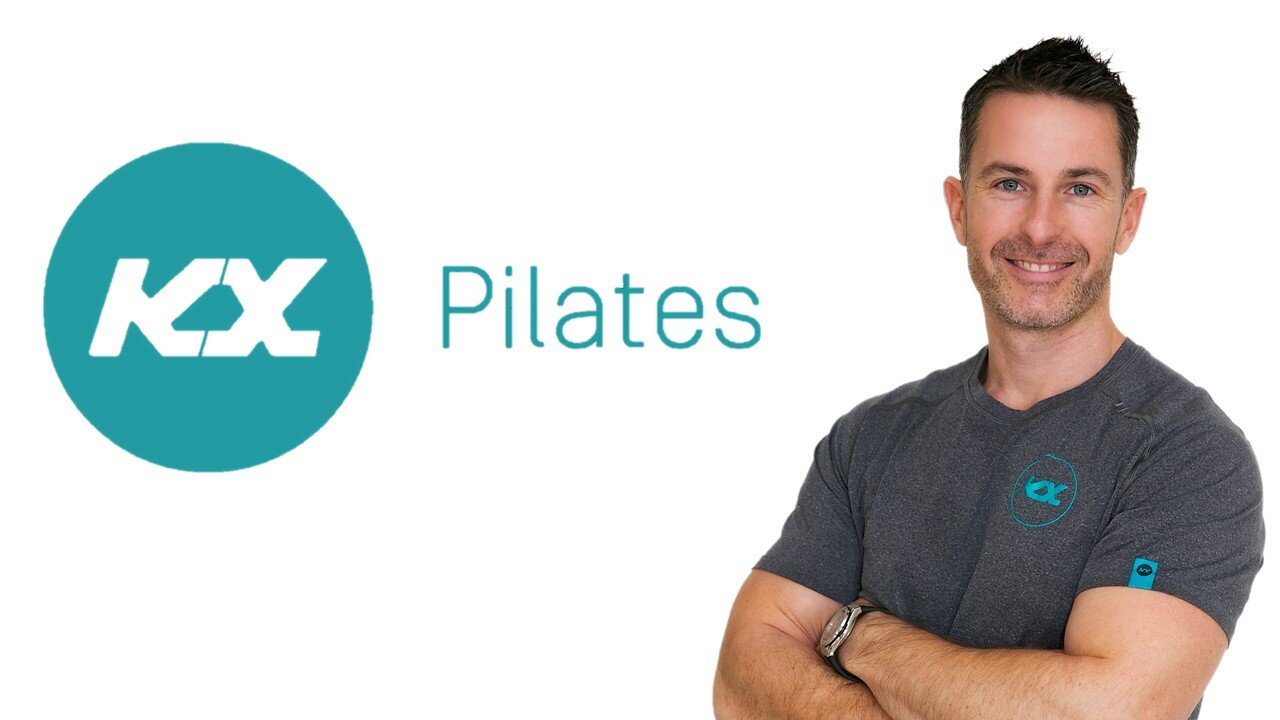
AARON SMITH, KX PILATES
Now with his brand present in Australia and Asia, Aaron Smith, Founder of KX Pilates, had to surpass the hardships of starting and growing a business. “I opened KX Pilates in Melbourne in February 2010. With 10 studios under our belt and a team in place to continue the growth in Melbourne, my wife Andi and I decided we would move to Sydney for two years to open and run the first flagship studio in Surry Hills,” Aaron recounted.
They researched on their competitors, studied the demographics of their market, and assessed their studio accessibility. Along with that, they matched as much as they could their Melbourne business. “It was an incredibly hard slog, but after 6-12 months, we saw huge success,” Aaron professed. It also helped that two of their best owners/trainers moved to Sydney with them to take on the other best locations available.
Aaron attributes the success of their expansion to PEOPLE. “The culture of the business also came with us. The brand has seen success in all other major Australian cities with the assistance of our Melbourne or Sydney-based trainers, moving to those places long-term.” On the international front, the same happened as they opened in Jakarta, Indonesia in 2018 with an incredible business partner, which they hope to replicate in China at the end of the year.
Aaron’s tips to those expanding to a new environtment are:
Do your research and grow in one place properly first. So many businesses just 'assume' that because their business has worked in one city/state or even country, it will work everywhere. This couldn't be further from the truth. Test out the market first, do you research on similar competitors in your space and start lean and build from there.
Drop the ego. Yes, it's great to say you are now in multiple cities, states or countries. But if you can continue to focus and grow your business in one place first, then do it. Fewer businesses in more locations is a recipe for disaster if you are not prepared. Higher expenses with travel and being farther away to manage your team will make running your day-to-day business tougher. Business is hard enough, so why make it harder if you don't have to?
Find the right people with the right brand fit and local cultural experience. You need to be able to trust them that they will do right by you and the brand. Our strategy is not just about putting dots on the map. It's about opening in a new country with the right person who will grow your brand in that place the way you want it to be done.

DION CASTLE, STRUBER
Expanding in various states of Australia is doable, although it’s not a walk in the park as Struber CEO Dion Castle explains how they enter new territories. “We've gone into three states and then doing the fourth and the fifth state at the moment. Each state is on a different level of a journey.”
Working primarily with governments and large enterprises, Dion admits that there’s a lot of high barriers to entry. Recognising this reality, they use data to understand the market and time their entry effectively. Once they have looked into the data, they conduct in-depth stakeholder analysis and assess what is required of them, particularly in terms of skills and talent. At the same time, they think of the branding and marketing elements needed in their work, as well as do lead generation and build their databases. Also, they focus on providing value to the industry, looking after the long-term interests of their clients.
“That's the early stages,” Dion remarked. “Once you're able to move through that, the next phase is about maintaining relevancy to your customers in the new markets. It’s continuing the same level of energy when you entered the market and sustaining that over time, showing that you are an active participant in the geographic region and finding ways to continue to support the agenda of the enterprise or the government and the community at large. Also, you continue to expand the talent locally step-by-step, ensuring that you've got the right team members to be custodians of what your company stands for. These are people who can continue the founder-led philosophies that made your company great in the first instance and continue on that legacy further afield.”
Going through all these activities in expanding his business, Dion shares some of the key learnings that he gathered from his journey. These are his guiding thoughts on expansion or entering into new markets, which requires people to do their homework, do their research upfront and make sure that they have the right pieces to support that:
‘Go slow to go fast’ and ‘ measure twice to cut once’. Doing data analysis and looking at your timing and your activity, try not to make rash decisions, particularly around talent that join your organization. Talent needs to join for the right reasons and at the right time and any rash decisions on talent will inevitably lead to churn and turnover. In our game, we need to make sure that the talent matches or is above and beyond the expectations of our customer base. Finding the right talent can take time, and you have to be okay with the fact that it takes time.
Note that investing in your geography will cost you two to three times more than what you planned or anticipated for it to cost. Even with your best projections, it will cost two to three times more and will take two to three times longer to do it right. If you think you can get away with it at a cheap budgetary expenditure level, it will still cost you a lot more because you'll have to pay for the learnings through the journey. And there's a lot of learnings that you will undergo during an expansion.
Make sure that you have an incredible supportive leadership and start to build that early. You need to try and identify as early as you can who will be the custodians in your new location to be able to carry the legacy forward. Leadership is something that takes the longest amount to build. However, you can purchase leadership but you can't purchase loyalty. You have to work to build loyalty over some time.
While you're going through this journey, you need to measure to get better. You need to constantly measure your performance against your objectives of entering the new state or region. It includes tracking your performance in the short intervals using reports and data that you collect to be able to show patterns and behaviours on how you're performing in your expansion efforts.
Don't be afraid to turn on and invest more or wind down a region based on the information that you get. Such information can be gathered not only from internal sources but also external sources in the economy, such as changes within the macroeconomic context. From there, you can adjust your strategy accordingly. At the very worst, have an exit plan. But in the markets that we operate in, it's a calculated investment, so an exit is only a very last resort, but would likely come back with a return mission in the future.

JOHN BEVITT, HONEYCOMB
Honeycomb, an innovative market research and customer insights agency, have consultants in Melbourne & Sydney, servicing clients Australia-wide. John Bevitt, Managing Director of Honeycomb, has a few tips for businesses that are considering to add a new product in their offer or to expand to new territory, whether it’s a geographical market or another industry:
Get to know your potential customer and make sure you’re solving genuine problems. Many times, a client has come to us with a product or service they are developing on the hunt for a potential customer or market to buy it. The most innovative products and services are those solving genuine problems. A lot of the research that we do helps businesses identify and develop these solutions by understanding the customer journey and their mindset, attitudes and pain points experienced throughout it. Start by talking to a few of your potential customers and identify patterns. From there, do a short survey with a larger group of prospects to validate these patterns and ensure they’re representative of the broader market.
Communicate clearly and stop trying to sound fancier than you are. We have found that we get the strongest response and greatest uptake when we demystify what we do for clients. By focusing on the outcomes and benefits of the service we provide, clients are given certainty around what needs to be done and why, as well as confidence in their ability to explain this to stakeholders. The temptation that commonly occurs is to package up a solution and put a fancy name on it with limited context behind how it works or what value it provides. While this can generate intrigue, it also creates a lot of resistance as clients find it difficult to understand or explain to their stakeholders.
For B2B Businesses, make sure you’re also delivering value to the human aspect, not just to the ‘client’ or business. When asked who my clients are, I usually respond, ‘Brand X’ and ‘Brand Y’, not Joe from Marketing or Monica from Product. As such, it can become a bad habit instead of adding value to the businesses you work with and the people in them. During COVID-19, a lot of our clients were fearful or uncertain. To help them, we brought them together and hosted virtual forums to share their experiences, strengthen their networks in the industry and validate what they were doing against each other. The sole agenda was to give the people we work with an ounce of certainty and confidence about the future and how to plan for it.
Taking into account these entrepreneurs’ experience and learnings in their expansion journey, they can be your compass and guidebook for business growth as you embark on what you may consider as your uncharted territories. It is better to equip yourself as you take your first step on unfamiliar environments rather than take the plunge without much preparation.
If you have an expansion experience or story to share, send us a message at communications@eomelbourne.org or drop us a note at the comments section below.