

BLOG
Anou Khanijou on Breaking the Glass Ceiling and Turning Challenges into Breakthroughs
For a 30-year-old woman to lead an organisation with a strong male presence is no easy feat. Moreover, being part of a community filled with goal-oriented entrepreneurs, business owners, founders, and CEOs is not for the fainthearted. Yet, in FY 2001–2002, Anou Khanijou stepped into the role of EO Melbourne president, guiding the chapter through a transformative period and helping strengthen its foundations.

For a 30-year-old woman to lead an organisation with a strong male presence is no easy feat. Moreover, being part of a community filled with goal-oriented entrepreneurs, business owners, founders, and CEOs is not for the fainthearted. Yet, in FY 2001–2002, Anou Khanijou stepped into the role of EO Melbourne president, guiding the chapter through a transformative period and helping strengthen its foundations.
“To be a young woman leader at that time, about 30 years ago, was challenging. But I have always been someone who goes with two feet in. And EO is one of those things where you need to be all in. If you are not fully committed, you will not get the best out of EO. People do not always understand that, but it is very true. That is something I understand really well. I think that is why I stepped forward. Every time I put both feet into EO back then, I gained tremendous value from it. So stepping into that leadership role felt like a natural instinct,” she said.
Leadership within EO, Anou observed, comes with constant scrutiny. In a community where leaders are empowered to voice their opinions freely, gaps in a leader’s behaviour or character are quickly noticed. Feedback is often immediate, and the pressure to perform is high, which can be confronting for those who struggle with critique.

Yet the pressure points became part of the learning. “There were many challenges when I was president, having to break the glass ceiling. I pushed boundaries and did things that, at the time, felt quite risqué,” she shared. She organised an Asia-Pacific-wide dinner event, a fashion parade, and even unconventional activities, all while seven months pregnant.
Being immersed in EO during those years gave Anou invaluable insight from her peers. “What EO allowed me to do was learn very quickly because I was always surrounded by leaders. EO members are leaders in their own fields, so I learned from them and recognised where I might have fallen short myself. I would look at them and think, ‘Wow, that’s a learning pocket.’ Then I would take that insight, put it into practice, and keep moving.”
She quickly realised that leadership is a constant learning journey. Every interaction and hurdle offered a lesson, shaping how she approached decision-making and communication. This process gave her clarity in guiding others and helping them understand their roles and responsibilities.
One of the most lasting lessons, according to Anou, is understanding the ripple effect of every decision and action. Early on, she recognised that a leader’s impact rarely stays within a small circle. The consequences often extend further than expected, and awareness of this shaped how she approached leadership.
These learnings carried beyond EO. Anou now serves on predominantly male boards, where she continues to be elected to leadership roles. She attributes this to the skills developed through years of observing, learning, and applying insights from her EO journey. Empathy, clarity, and awareness guide her approach, allowing her to influence and inspire those around her.
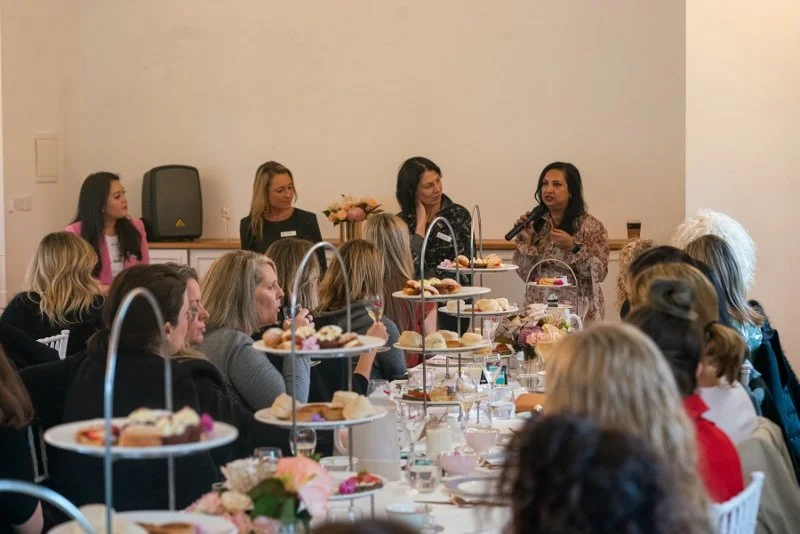

“Now, I’m the president of several community organisations, including a charitable trust. It allows me to see things clearly and understand that when we make decisions as leaders, there is a ripple effect. It also shows how important it is to keep everyone engaged and motivated toward a shared vision, and how crucial it is to manage that effectively,” she said.
Over the past three decades, EO has transformed in ways Anou has witnessed closely. “When I joined, things were very different. The chapters were smaller, systems and processes were just beginning to take shape, and the world itself was a very different place. Joining in my early 30s and becoming president after a few years, I experienced firsthand how the organisation has grown, adapted, and diversified over time, shaped by changes in communication, behaviour, and societal attitudes.”
A particularly remarkable shift has been the growing recognition of women in leadership. “The respect for women and the ability for them to shine in leadership spaces is so much stronger now than when I was there,” Anou reflected. With expanded structures, clearer processes, and greater support, EO provides opportunities that were simply less than possible decades ago.
For women who have yet to step into leadership, Anou sees EO as a safe and empowering space to grow. “Even if you’ve never led before, the structures, systems, and processes now give you the chance to develop your skills and step up with confidence,” she explained. She encourages women who are courageous, strong, and eager to learn to fully engage, knowing that EO is a platform where they can explore their potential, contribute meaningfully, and thrive as leaders in their own right.
Only in EO: A Candid Conversation on Leadership with The Hon. Julia Gillard AC
EO Melbourne recently hosted a powerful and thought-provoking Fireside Chat with The Hon. Julia Gillard AC, Australia’s 27th Prime Minister, and the first and only woman to have held the role. This exclusive EO event offered members a rare opportunity to hear firsthand from one of the nation’s most respected leaders, whose insights into leadership, trust, and resilience left a lasting impression on all who attended.
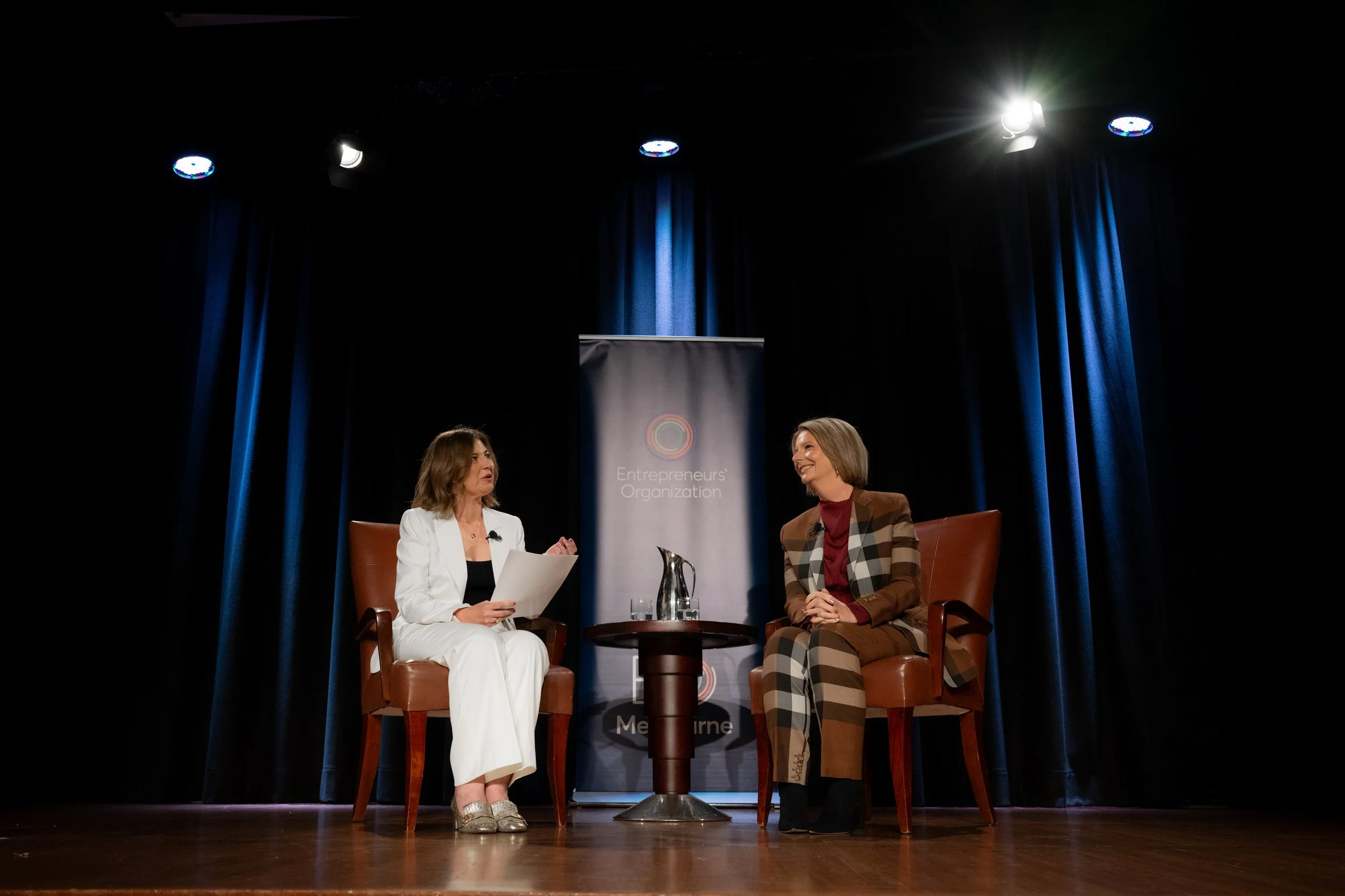
EO Melbourne recently hosted a powerful and thought-provoking Fireside Chat with The Hon. Julia Gillard AC, Australia’s 27th Prime Minister, and the first and only woman to have held the role. This exclusive EO event offered members a rare opportunity to hear firsthand from one of the nation’s most respected leaders, whose insights into leadership, trust, and resilience left a lasting impression on all who attended.
Moderated by Tracy Angwin, Marketing and Partnership Director of the EO APAC Regional Council, the conversation went beyond the headlines and into the lived reality of leadership at the highest level. Ms Gillard shared candid reflections drawn from her time in public life, offering a glimpse into the personal and professional demands of leading under pressure.
The Power of Purpose
A key theme throughout the discussion was the power of purpose as a guiding force. Ms Gillard spoke of how anchoring decisions and actions to a clear sense of purpose enabled her to navigate complexity, manage time, and stay emotionally grounded. Far from being a motivational slogan, purpose became a practical tool for filtering what truly mattered and what didn’t.
Aligning Values and Opportunities
Ms Gillard also explored how aligning values, surrounding oneself with the right people, and crafting a lifestyle that supports long-term wellbeing are all essential filters for choosing opportunities. These insights sparked powerful reflection among EO members, many of whom recognised similar decision points in their own leadership journeys. Her message reinforced the idea that success is not just about power but it’s about using influence in service of what truly matters.


Inclusive Leadership and Gender Equity
Her perspectives on gender equity and inclusive leadership further enriched the conversation. Drawing from her co-authored book Women and Leadership: Real Lives, Real Lessons, she highlighted the value of lived experience and the importance of creating space for diverse voices in leadership.
A Unique Experience from EO
This EO-only event was a reminder of the power of authentic dialogue and learning from those who have walked the path before us. Ms Gillard’s wisdom, grace, and unfiltered stories offered not only valuable leadership lessons, but also an inspiring call to lead with purpose, clarity, and courage.
This event was a powerful reminder of what makes EO truly unique: real conversations with remarkable leaders, shared among like-minded entrepreneurs committed to growth. If you're a founder or business owner seeking deeper connection, world-class learning, and a trusted peer network, reach out. EO might be exactly what you’ve been searching for.
Transformative Leadership Lessons with Cameron Herold
The EO Melbourne community recently came together for an inspiring workshop led by leadership expert Cameron Herold, renowned founder of the COO Alliance and author of The Second in Command . The event, titled “The Second in Command: Unleashing the Power of a COO” and “2 Ladders: How Growing Your People Grows Your Company,” offered attendees practical strategies to strengthen their businesses through better leadership structures. Over the course of the day, Cameron shared insights drawn from his extensive experience coaching CEOs and scaling companies like 1-800-GOT-JUNK?, leaving participants with actionable tools to elevate their teams and operations.

The EO Melbourne community recently came together for an inspiring workshop led by leadership expert Cameron Herold, renowned founder of the COO Alliance and author of The Second in Command. The event, titled “The Second in Command: Unleashing the Power of a COO” and “2 Ladders: How Growing Your People Grows Your Company,” offered attendees practical strategies to strengthen their businesses through better leadership structures. Over the course of the day, Cameron shared insights drawn from his extensive experience coaching CEOs and scaling companies like 1-800-GOT-JUNK?, leaving participants with actionable tools to elevate their teams and operations.
The first session focused on the pivotal role of a Chief Operating Officer (COO) in driving business success. Cameron guided attendees through the process of identifying, hiring, and nurturing top-tier senior leaders who align with a company’s vision. He emphasized the importance of trust and clear communication between CEOs and their COOs, which he described as the foundation for seamless collaboration. By leveraging a skilled COO, Cameron explained, CEOs can boost revenue, increase profits, and reclaim valuable personal time—a revelation that resonated deeply with many in the room.
Cameron also highlighted common pitfalls in senior leadership hiring, offering cautionary tales and practical advice to help attendees avoid costly mistakes. His real-world examples illustrate how the right second-in-command can become a powerful asset, enabling CEOs to focus on strategic priorities while their COO drives operational excellence.
The second half of the workshop shifted to people development, framed as the cornerstone of sustainable growth. Cameron introduced the science of adult learning and outlined twelve essential leadership skills every manager should cultivate, from decision-making to conflict resolution. He shared techniques to build managers’ confidence and abilities, empowering them to inspire their teams and drive performance. By investing in people, Cameron argued, CEOs simplify their roles, improve employee retention, and create a culture of excellence that scales revenue and profit. Attendees left this session equipped with practical steps they could implement, ensuring the lessons would have a lasting impact.


EO Melbourne added a thoughtful touch by gifting each participant a copy of Cameron’s book, The Second in Command: Unleash the Power of Your COO, which Cameron signed at the event. This resource, described as a go-to guide for scaling businesses through strong leadership partnerships, served as a fitting takeaway from a day filled with inspiration and insight. The gesture was met with enthusiastic appreciation, underscoring the value attendees placed on the event.
Throughout the day, participants engaged deeply with Cameron’s teachings, reflecting on how to apply his strategies to their own businesses. Many shared moments of realisation, particularly around the importance of aligning leadership hires with company values and the transformative power of investing in team development. Conversations during breaks buzzed with ideas about restructuring leadership dynamics and fostering a culture of continuous learning.
The value of EO’s KE Program to key executives and entrepreneurs
In every business, people are essential to drive the organisation forward, reach one’s goals and allow the company to operate in the long term. This is why strengthening your 2iCs and key executives is necessary to keep your business running smoothly and steadily as well as enable it to grow and expand to new markets and horizons.
The good news is that EO Melbourne has a Key Executive Program (KEP) that enables its members to learn growth strategies from EO and execute them into their businesses with key management buy-in and participation. This program allows an EO member to have a key executive from their business take part in EO learning events and EO Accelerator learning days and become a member of a Key Executive Forum.

In every business, people are essential to drive the organisation forward, reach one’s goals and allow the company to operate in the long term. This is why strengthening your 2iCs and key executives is necessary to keep your business running smoothly and steadily as well as enable it to grow and expand to new markets and horizons.
The good news is that EO Melbourne has a Key Executive Program (KEP) that enables its members to learn growth strategies from EO and execute them into their businesses with key management buy-in and participation. This program allows an EO member to have a key executive from their business take part in EO learning events and EO Accelerator learning days and become a member of a Key Executive Forum.
Through this program, EO members are able to communicate and learn jointly with their key executives as they share the unique benefits of EO with a key executive from their business. In addition, it empowers EO Members and helps them align with their key executives as EO provides them with the tools, accountability, community and support to aggressively scale and master some business best practices and become better leaders. Also, the benefits are two ways as the program serves both the entrepreneur and the key executive.
EO Melbourne Member Harry Sanders, Founder of StudioHawk, had his General Manager, Lawrence Hitches, join the chapter’s Key Executive Program. Both shared the benefits of the program, helping them in their respective professional development and their organisation’s growth.
"I had a great experience as an EO member and got so much value out of Forum, I really wanted Lawrence to be part of that experience. Being able to talk about his 5% issues without judgment in a safe environment, share experiences, learn heaps, and events and networking helped Lawrence understand the broader business community in Learning Days and really cemented him as a leader. The business has gone through many challenges and first had seen the effect Forum has had on being able to overcome them,” Harry said.
Lawrence was enthusiastic that he has become part of EO’s KEP. "I heard great things about EO from Harry and other people about how much learning and insights you can gain from talking to like-minded business people owners and people with similar challenges ahead of them. EO provides many workshops and communities that have helped our business in hard times. Implementing EOS practices has helped restructure our org chart to be solid and more accountable. The value of the KEP program is immense and I’d recommend it to any EO member to sign up their key execs."
Another Key Executive that has joined the program is Cindy Liu, an accountant at Masseuse Massage Chairs. She shared how becoming part of the KEP has impacted her growth as a professional. "I have been in the Key Executive Program for 2 years now. I have learned so much from every interaction I have had with both the group learning days and our individual forum. To start with, it is a great opportunity for me to step out of the business to learn things from the business strategy level rather than just day-to-day operations. The importance of that is I get to experience what it feels like as a business owner seeing things from a bigger picture rather than just working within my own department. The alignment with the business owner is critical from that perspective."
At present, EO Melbourne has two forums for Key Executives. They also get to attend the quarterly Learning Days as well as other learning events that the chapter offers for those in the program. To know more about our KEP, visit https://www.eomelbourne.org/key-executive-program. Interested to join EO Melbourne? Check out our https://www.eomelbourne.org/join page.
Unleashing one’s leadership potential through EO
How do you unleash your leadership potential? For Entrepreneurs’ Organization, it is important to support the needs of the 360° entrepreneur through business, family, community & personal experiences and help them grow, develop and reach their full capacity as business leaders.
This is why EO’s Global Leadership Conference (GLC) plays a critical role in defining what leadership at EO means, serving as a source of inspiration and a key moment to building a community for tens of thousands of EO members. GLC is EO’s flagship event that empowers members with the tools, insights, and networks they need to unlock their capabilities.
How do you unleash your leadership potential? For Entrepreneurs’ Organization, it is important to support the needs of the 360° entrepreneur through business, family, community & personal experiences and help them grow, develop and reach their full capacity as business leaders.
This is why EO’s Global Leadership Conference (GLC) plays a critical role in defining what leadership at EO means, serving as a source of inspiration and a key moment to building a community for tens of thousands of EO members. GLC is EO’s flagship event that empowers members with the tools, insights, and networks they need to unlock their capabilities.
The theme for this year’s GLC is ‘Unleash’ – helping every member unearth greater success, find their greater purpose and have a greater impact on those around them. It saw an innovative in-person and virtual hybrid format that made it accessible to all through in-person events in Washington, D.C., USA and Barcelona, Spain, and virtual access on its online platforms. Over the course of five days, talks, workshops, webinars and interactive sessions helped EO members hone their skills and abilities as individuals and as a collective – finding opportunities, not challenges; stepping stones, not roadblocks.
Speakers from different industries shared their journeys, insights and learnings to inspire participants to look within their respective experiences and apply the lessons they captured from these sessions. Headlining the GLC 2022 was supermodel-turned-super businesswoman Tyra Banks, who talked about her beginnings, the challenges and the successes she experienced in her journey. Here are a few takeaways from some of the speakers during the conference.
“Don’t delegate your core competency. The biggest lesson I’ve learned during quarantine is that it’s not always about defence, you have to play offence. You have to figure it out. Another lesson I learned is that there’s strength in numbers.” - Tyra Banks, Executive Producer & Host of America’s Next Top Model and CEO of the Tyra Banks Company
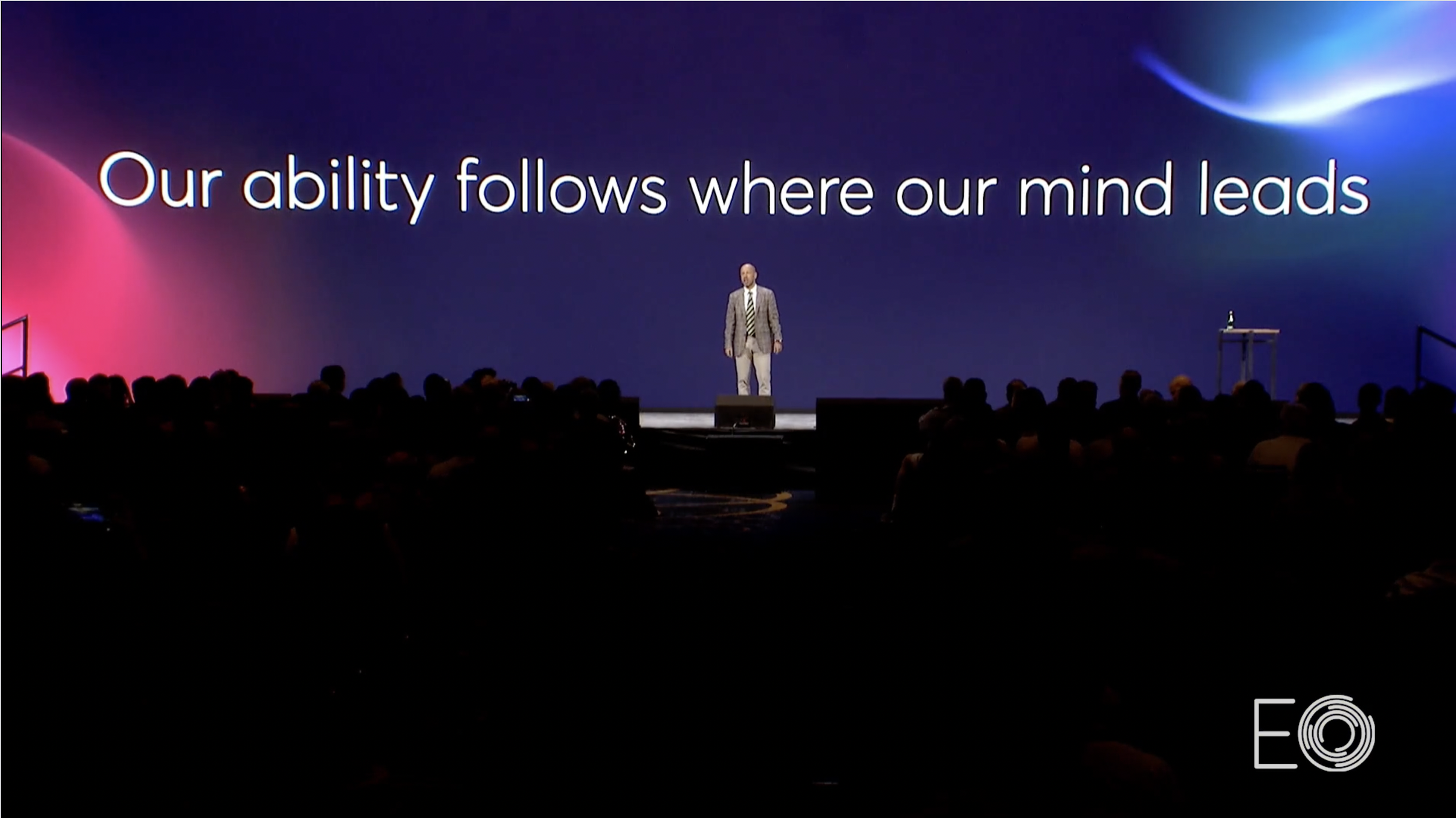
“Our ability follows where our mind leads. Unleashing our potential is a strength we all have. ‘Unleash’ is more than the theme of this year’s GLC. ‘Unleash’ is a rallying cry for us, entrepreneurs, to level up, to be more of who we are, to bend the future.” - Marc Stockli, Managing Director of MOS Advisory Services
“I learned that sometimes life doesn’t work out the way that we plan it, it very seldom does, but I learned that I am the one who chooses how I want to live my life. Some goals are hard to reach, they may feel like an eternity, and my goals were definitely unrealistic. But instead of being demoralised by the vastness of that goal, I decided to break it down into one day at a time. By doing so, it just didn’t feel like it was that overwhelming.” - Karina Hollekim, professional Free-skier, BASE jumper and Co-founder and Head of E-Learning for Young Happy Minds
“The key is utilisation. One of the biggest lies is that knowledge is power. Now, is it really? At best, knowledge is potential power. It becomes ‘power’ when we utilise it and when we apply it. The number one skill to your success is your ability to learn rapidly. If you and your team could learn rapidly and translate that learning into action, it’s the ultimate competitive advantage, bar none.” - Jim Kwik, Founder at Kwik Learning
“Nothing that is meant for you will ever get away if you’re open to it. It’s okay to take a turn and a change into a new direction that is completely different from where you started and where your passion lies. It doesn’t have to be these major, big changes that we make. It could be small, little changes that we make along the way, utilising the tools and opportunities that we already have in our hands, creating different outcomes for ourselves.” - Tala Raassi, Fashion Designer, Entrepreneur & Author
“What is your victory going to be? What’s the story that you’re going to tell with your life? What is your purpose? What is your company’s purpose? What are you going to give to your employees so that they can live a life of purpose? What are you going to do with the blessings of your life? As you guys go forth, I want you to think about what I said at the very beginning – this whole ‘help one, help many’ thing. Who’s your one? Go back to wherever you live and let’s just solve it for one person. But I think I know what’s going to happen. You all don’t know how to stop at one. One’s going to turn into two, two into four, and all of a sudden, a roomful of people that are changing the world.” - Mick Ebeling, Founder and CEO of Not Impossible
“I was never willing, at any point, to say ‘I’m done, I give up’ because defeat is not a real thing until the second you say, ‘I give up.’ And even when I saw the Thuggs, I was done for the season, but I wasn’t done for my life.” - Brian Smith, Founder of UGG Australia
More insights were shared by various other speakers in the different Learning Blocks – Potential, Community, and Impact – and the Breakout Sessions during the conference. The GLC is an occasion for EO to come together and unlock the power of community. It provides an opportunity to use our connections to make entrepreneurship a force for good in the world and to unearth how we can have greater impact as an organisation.
Three Qualities of a Successful Entrepreneur
Effective business leaders are those who can steer their companies and teams towards the road to success. As the path may often be filled with potholes and uphill climbs, it is advantageous if those who drive their organisations forward possess the right values and characteristics that can help them reach their goals successfully at the least possible time.
Jacob Spencer, Owner and Managing Director of Mobile Skips, cites the various virtues that he finds useful when leading a team. Among them, he names three qualities – persistence, patience and resilience – as the most significant in shaping him to become who he is today. He shared, “There are many, many traits and attributes that have helped me on my journey as a business leader. On reflection, I believe these three have been the most important and have had the biggest impact on me.”
Jacob Spencer, Owner and Managing Director of Mobile Skips, cites the various virtues that he finds useful when leading a team. Among them, he names three qualities – persistence, patience and resilience – as the most significant in shaping him to become who he is today. He shared, “There are many, many traits and attributes that have helped me on my journey as a business leader. On reflection, I believe these three have been the most important and have had the biggest impact on me.”

Persistence
“Having started my working life flipping burgers at McDonald's, I was exposed early on to the stories of Ray Kroc and his successes (and failures) in building the McDonald's brand late in his working life. Ray’s consistent and persistent drive to succeed, regardless of the hurdles, failures and unexpected setbacks, was inspirational. When problems arise, and they initially seem impossible to navigate, having the faith to persevere and persist and believing in our goal has helped ensure I keep moving forward and leading the team through uncertain times,” he remarked.
Patience
According to Jacob, “This one goes hand-in-hand with persistence. A couple of years ago, I accepted that if I truly wanted a business that ran without my operational input and daily direction, I needed to invest the majority of my time in developing the team and the systems, then have patience in waiting for the outcome. This has been the hardest lesson, as many times my lack of patience has led to a setback—in the heat of the moment, when I see the solution I can’t help myself but to jump in and take over, eroding the hard-won progress already made.”
Resilience
“The last 6 months have thrown more at us than anytime I can imagine. And, what's more, there is no delineation between the impact at home and in business. Recently, I heard someone reflecting on tough times, ‘without darkness, there is no light and without sadness, there can be no happiness’. Difficult times are guaranteed, but so are the happier ones afterwards. Facing problems, recognising difficulties and enduring them have helped me realise that we are all much more resilient than we think and that I’ve still got a long way to go,” he acknowledged.
When faced with challenges and difficulties, Jacob finds that having persistence, patience and resilience enables him to meet them head-on with confidence and determination. These and many good qualities are necessary for those who aim to achieve their goals and reach the peak of success.
What positive traits do you want to build up in yourself? What characteristics have you found helpful when taking the entrepreneurial journey? Share your thoughts below.
Leadership in the Time of Crisis
EO Melbourne Navigating Now and Preparing for Post-COVID-19
"We've aged a generation in the past three weeks. What matters has sharply come into focus. Family matters. Love matters. Kindness matters. Health matters. Generosity matters. People matter. Community matters. The rest is just noise.
Aside from physical distancing, the biggest thing you can do right now is to choose to see the best in each other. Be kind. Be patient. Be tolerant.
Be quick to help out in any way that you can. Be forgiving when you would otherwise be upset. See things through the eyes of others and try to understand where they are coming from.
Seek out opportunities for generosity. Reconnect with your community. Reconnect with yourself. Reconnect with your priorities. Live them."
- Anonymous
The onset of the COVID-19 pandemic has brought governments, businesses, and communities to a standstill, affecting lives all over the world and across all levels of society. Entrepreneurs are not spared from the adverse effects of this pandemic. EO Melbourne’s President Kym Huynh shares how the crisis has impacted the lives of entrepreneurs in Melbourne and how he, and his Board, tackled the situation head-on to both help those affected navigate through the challenges and prepare for a world post-crisis.
EO Melbourne Navigating Now and Preparing for Post-COVID-19
"We've aged a generation in the past three weeks. What matters has sharply come into focus. Family matters. Love matters. Kindness matters. Health matters. Generosity matters. People matter. Community matters. The rest is just noise.
Aside from physical distancing, the biggest thing you can do right now is to choose to see the best in each other. Be kind. Be patient. Be tolerant.
Be quick to help out in any way that you can. Be forgiving when you would otherwise be upset. See things through the eyes of others and try to understand where they are coming from.
Seek out opportunities for generosity. Reconnect with your community. Reconnect with yourself. Reconnect with your priorities. Live them."
- Anonymous

The onset of the COVID-19 pandemic has brought governments, businesses, and communities to a standstill, affecting lives all over the world and across all levels of society. Entrepreneurs are not spared from the adverse effects of this pandemic. EO Melbourne’s President Kym Huynh shares how the crisis has impacted the lives of entrepreneurs in Melbourne and how he, and his Board, tackled the situation head-on to both help those affected navigate through the challenges and prepare for a world post-crisis.
“What differentiates COVID-19 from other world crisis such as the Global Financial Crisis of 2007-2008 and September 11 of 2001 is that no one knows what the end date of this pandemic is. Consequently, we cannot accurately plan for the future when we do not know when the endpoint for the current crisis is,” Kym states.
“During uncertainty, people seek answers, people seek leadership, and people seek direction. And when you throw a global pandemic on top, you have an environment where emotional states are heightened, and people become prone to acting emotionally rather than rationally. When I consider this in the context of leadership, it is important to augment how we typically lead with such speed in decision-making and an increase in our communications cadence,” he continues.
When faced with a challenge or difficulty, Kym’s normal process is to:
1. Step back
2. Choose not to immediately react
3. Assess the environment and situation
4. Gather multiple credible data points
5. Stategize
6. React from a place of stillness
Leading the team
Entrepreneurs, by definition, are leaders. The people employed, the family members and the communities that entrepreneurs touch all look to them for cues on how to react and respond. “If you’re going to be in a position where you are seen by others as that of being a leader, you might as well be a good one,” Kym reflects. “One thing I have learned from leadership during COVID-19 is that I don't always need to have the answers,” Kym quips, “but rather that I need to be present, constant and visible so that I create that environment and space of safety and stability”. In that, he makes sure he is a constant so that he can provide stability to his Board, EO, his family and his community.
He enumerated the immediate things he did to mitigate the complexities of the situation:
1. Make sure everyone is calm and collected
“The topmost priority for me was to manage the emotional state of the collective, and dive deeper 1-on-1 with individuals where needed,” Kym states. He believes that making sure everyone, particularly the Board and the team, is in a still, calm and collected state-of-mind is very important. For the Board and the team to lead, they need to be able to make good decisions. To make good decisions, they need to be in a good emotional state. Therefore, he made it a priority to make sure that every single person around him was good with themselves so that they could effectively look after the Chapter.
2. Create an atmosphere of safety and stability
He made sure he was highly visible, and accessible by opening his normal lines of communication more so that people can come to him for that feeling of safety and stability. “In my experience, sometimes the little things you do can mean the world to others, and COVID-19 amplifies this experience. Whether it be a phone message, an email, a phone call or a video call, I have found that these simple actions reassure people that I—and my Board--are present and that we are thinking about the situation. These simple actions are important because people are looking for stability in a time where there's so much instability,” says Kym.
3. Create concise, focused and impactful messages
Once everyone is calm and feels safe, he and his Board were quick to communicate to the Chapter that they’re there for the members, doing everything they can to support the members with messaging that can be comprehended easily, leaving no room for ambiguity. “It is important that any messaging is easy-to-understand, and leaves no gaps because if we communicate with gaps, others will fill in the gaps for us, and they will fill it in incorrectly. Even more during a crisis, it is imperative that the messaging is concise, focused and impactful,” Kym states. “It was important for myself and my Board that we communicate a message of unity, solidarity, and that together we are stronger,” he adds.
Plan of action
Words of assurance and encouragement must be accompanied with a specific, timely and measurable plan of action. Kym convened his Board to exchange experiences and insights and review the collective feedback and sentiment from the community. These are the action points they came up with during their fruitful Board meeting and in the succeeding discussions:
1. Appointment of a Resident Psychologist
Knowing that people are hurting and many businesses have been severely impacted, the Board made it a priority to support those who were in need. To show that they’re there for the members, the Board decided on the appointment of a resident psychologist that is entirely funded and supported by the Chapter. That is, any Member of the Chapter, if they need to, can call and directly reach the resident psychologist for a confidential conversation.
2. Member-to-Member support
Members of the Chapter are paired up with one another, wherein they can reach out and stay connected. It provides members with an avenue to pick up the phone, call another member, check on that person and let the conversation flow. “It is crucial that we lean into, and invest in, our relationships with one another during times of crises,” Kym shares.
3. Board-to-Member reach-out
The Board recognises that there are a handful of members who have contracted and remained quiet while fighting their fires. These members were identified and assigned to Board Members. Kym speaks from experience, “When I'm in a crisis, I tend to feel like I don't want to burden and bother others with my issues. It is a difficult compulsion to fight, despite cognitively knowing how much better off I will be if I share openly with others and being vulnerable. The lesson here is to not wait for people to ask for help, but to be proactive, pick up the phone, and reach out. Our small acts of kindness and compassion can mean the world to another.”
4. Supporting members through the current crisis, and preparing members for the world post-crisis via condensed learning events
The Chapter launched a 12-week webinar series consisting of members sharing stories, learnings, experiences and expertise with other members. According to Kym, “These learning events create solidarity, reinforce the community, and create safety. Knowing this, we moved fast to create these events, source our speakers and add resources to promote them to our members.”
From the board meeting, webinar topics were discussed, wherein the first half of the series is focused on navigating the current crisis while the other half is to help prepare members for what happens post-crisis. Topics were determined based on the issues that the Board Members were experiencing themselves and those that they heard from other entrepreneurs and business owners.
5. “No member will be left behind”
EO Melbourne adopted the motto, “No member will be left behind.” The message was communicated quickly and repetitively. It was short, concise, focused, and left no room for misinterpretation. The Board also ensured that the substance of the message could be supported by ensuring that the Global Support Package and Local Support Package combined to create a substantial assistance package.
“We are mindful that there are members whose entire businesses and livelihoods have been severely impacted, and that they're in a very stressful and overwhelming situation. We accounted for this type of scenario. So, we wanted to make sure that if any member wishes to continue to engage with EO next year, we will find a way to make it happen,” asserts Kym.
Moving forward
Although the future seems uncertain, Kym accentuates that the EO Melbourne Chapter must move forward stronger, better and wiser, highlighting that we are stronger together. He illustrates this by sharing the idea of a stick, wherein if it remains alone, can easily break. But if bundled together with other sticks, it becomes significantly more difficult to break.
For Kym, “We must move forward stronger. We must be more connected with one another, and with that connection will come solidarity. We will move forward better, wherein we will be kinder to ourselves, each other, our families, our friends, our teams, and our communities. We will move forward wiser when we can carry the lessons we've learned during this crisis into the future. After all, like it or not, the crisis has happened, so it is incumbent on ourselves that we do what we can, to make the best out of the crisis.”
“Times of crisis creates opportunities for great leaders to emerge. It is leadership not only in our businesses but also in leadership with ourselves, our families and our communities. I hope that every single person reading this finds it within themselves to stand tall and proud, and to step up to becoming a great leader, one that serves others, leads with compassion and lifts those around them. We started the year with the theme, ‘our best year yet,’ and with our leadership, not only can this be the best year yet for ourselves, our businesses, families and communities, but also the EO Melbourne Chapter,” Kym imparts.
Mentoring your team effectively
Business growth is not only measured by the increase in sales and profit but also on how the organisation develops and improves. Human resource development allows you to shape the people within your organisation and let your venture grow and thrive.
Business growth is not only measured by the increase in sales and profit but also on how the organisation develops and improves. Human resource development allows you to shape the people within your organisation and let your venture grow and thrive.
Whether there is a newbie in your team, someone up for promotion, a member being honed for succession or only a skeleton staff is working and you have to deal with a lean organisation, training a team member is part of your human resource development. One form of training is by mentoring, which is teaching new skills, adding knowledge and guiding the person-in-training.
It can be done formally and informally, as mentorship can also be part of your corporate culture. However, if you have a goal in mind and to make sure that your mentorship is effective, there must be a certain framework where the mentor and mentee can refer to as they go through the process. You or your HR may outline the things needed for mentoring, such as the activities we have listed below.
Do a skills review
Before you plan out how you will conduct your mentoring, do first a skills review so that you can identify the strengths and weaknesses that the person can work on as well as where the skills set can fit in your organisation. What are the competencies that need to be built up? What talents and capabilities that must be instilled in the mentee?
Set clear objectives and accountabilities
Once you have identified the skills that can be enhanced and those that still need to be developed, design the objectives and measurable goals of your mentoring. Draw up an action plan and specify who is accountable for which. Stipulate how you will achieve your goals and how to evaluate if the mentoring is indeed successful.
Build a good mentor-mentee relationship
As much as you have a goal in mind, don’t forget to put importance on the whole process and the relationship. As tennis player Arthur Ashe once said, “Success is a journey, not a destination. The doing is more important than the outcome.”
Trust is a good foundation to make the mentorship a fruitful one. Mentors must exercise patience and provide motivation and inspiration to the mentee. On the other hand, the mentee must be open to correction and learning so that the lessons that the entire experience can bring will be ingrained deeply to one’s frame of mind.
Delegate and assign tasks
Experience, as they say, is the best teacher. The best way to mentor someone is to allow them to be immersed in various situations where they can exercise good judgment and resourcefulness. Delegate tasks that the person can work on. Don’t spoon-feed. Rather, be a guide and allow room for the person to do things based on his abilities and work style.
Monitor and evaluate
Have a regular huddle or avenue where you can assess the short-term goals of your mentoring. By monitoring the progress of the process, you will be able to define the areas where you need to work on the most to achieve the objectives you have set for this mentorship.
Mentoring is a way of sharing knowledge and building expertise among your people. As your team develops, your business will also grow. Even when you have a lean organisation, if you have quality people, it will keep your venture going. Moreover, looking after the improvement of your staff also boosts their morale and strengthens your relationship with each other. But as you mentor your people, it is also best that you also look after your professional growth. Have someone mentor you as well so that you keep on increasing, expanding and improving your skills set and experience as an entrepreneur.
Data vs gut-feel in decision-making
How do you make decisions for your business? Do you rely on numbers or to your intuition? In this age where information is vast and several tools are available in measuring them, many companies turn to data in helping them come up with plans and strategies for their businesses.
How do you make decisions for your business? Do you rely on numbers or to your intuition? In this age where information is vast and several tools are available in measuring them, many companies turn to data in helping them come up with plans and strategies for their businesses.
It cannot be denied, however, that there are entrepreneurs who gained resounding success for listening to their business instincts. But with resources, people and many other things on the line, you cannot afford to take a huge risk and decide on something that cannot deliver the expected result.
There are pros and cons when deciding based solely on data available or listening only to what your gut is telling you. The key is a balance of both. There are times when you need to take into consideration one over the other but it is helpful not to discount the other in the process of arriving at a resolution.
Data-gathering may take a lot of time, effort and resources. While numbers can scientifically provide a basis in forecasting what is to happen, there are other factors involved that data cannot fully capture. Since businesses always involve people, emotions and other influences may come into play that data may not be able to completely predict. That’s where gut-feel comes in. Certain decisions have to be made instantaneously and your instinct and hunch can guide you to making a good one. The downside with intuition is that it is more of a hit or miss thing, which can lead to either great achievement or a huge failure.
Numbers may sound cold but logic can provide a greater probability. On the other hand, perception and gut-feel will provide the warmth and may up your chances for success. Here are some instances of how looking at both methods can be advantageous in decision-making.
Spotting trends and patterns
Consumer behaviour can be plotted and measured, which can allow you to see patterns on how trends come and go. Data will provide you with a rationale on how the market moves and allow you to see the next things that may happen. However, how things will unfold cannot be foreseen fully by the numbers. Changes in human habits are unpredictable because people’s feelings are not based on logic. You need to have a good grasp of your market through experience and relationships, which may be able to complete the picture that data can partially provide.
Getting feedback
Surveys are prevalent nowadays, especially with modern technology, as they can be administered online. It’s a good way to get feedback from your clients and prospective customers. But it can only gather limited information as you may not fully know the rationale as to why participants gave such answers. But if you communicate effectively with your market and you interact with them regularly, you will be able to comprehend why they behave in a certain way. Knowing them well will enable you to get their pulse which graphs and pie charts may not be able to entirely provide.
Planning strategies
You can craft your strategies and tactics based on scientific facts. It may save you unnecessary losses as it will help you efficiently match the need and demand of the market rather than taking a shotgun approach and make you overpromise what you can do or underpromise and limit your capability. But there will be times when experience and right judgment may give you a better lead than what data can offer. You can inject some creativity and ingenuity in your strategies based on your gut-feel and good perception.
Putting your faith in your intuition may pose an enormous risk. But going into business is a risk in itself and only those who are courageous can truly achieve success. However, you can take a calculated risk when you back your judgment with data. That will increase your odds towards success.
Making good decisions as an entrepreneur
Business owners face tough decisions every day. There are several things that need your attention, including fires to put out. More often than not, these decisions can affect not only your personal life but also those of others. The responsibility of making a choice that can chart or hinder the growth of your business is a heavy burden to take.
Business owners face tough decisions every day. There are several things that need your attention, including fires to put out. More often than not, these decisions can affect not only your personal life but also those of others. The responsibility of making a choice that can chart or hinder the growth of your business is a heavy burden to take.
However, there are various factors to consider when you make a decision. Oftentimes, you have to take different approaches depending on the situation. And even if you encounter similar circumstances, there is no surefire formula on which solution to take because results may vary from time to time. The best you can do is to make a calculated risk and lessen the possible negative impact of the decision you take. These are things you need to consider to help guide you in choosing the most suitable path for you.
The reason for the decision
Before you look at your options, analyse first the reason why you need to come up with a decision. Knowing your purpose will help you weigh your choices better. Are you going to make a decision that can help boost the sales of your business or is it for stronger long-term relationships with clients and your team? Priorities may change at any given point, so make sure that you are making a choice that will support your present need and priority.
Effect of the decision
What is the possible effect of your decision on yourself, your business, your family, your clients or people involved? Some decisions may be minor to you but major to others. Take into consideration the probable outcomes if you choose a different route. While you are at it, deliberate the short-term, medium-term and long-term effects of your decision.
The time needed to make a decision
There are circumstances where you need to think and act fast. Otherwise, you might lose an opportunity or prolong a crisis. On the other hand, there are instances when you shouldn’t rush with your judgment, but have to take time to assess the various angles of the situation and the options available.
Value of feedback from others
It is not unusual to seek opinions from others, especially those who have more experience or who had been in the same state before. But when you gather feedback from others, it cannot be avoided that there will be opposing or varying views. You need to ask yourself, are you getting inputs from others because you just want to affirm what you have already decided or are you approaching the right people who can help you see through the gaps?
Information and resources available
Is the information available up-to-date that it will help you see the complete scenario when you go by your decision? Are there enough resources to back up what you have decided to do? While some options appear ideal and perfect, carrying them out may be difficult to do because you do not have the capacity and capability to follow it through.
You will never really know when you have made the right decision until the results start showing. Making a decision involves logical and strategic thinking as well as listening to your gut-feel. However, bear in mind that as a business owner, decisions you make may affect several people in the process. There are times when you have to make sacrifices and go against the flow for the greater good or for long-term success. It is good if you can unburden the load by sharing your sentiments with like-minded individuals, similar to the Forum setting in EO, without having to reveal confidential matters. In the end, decision-making is a responsibility you have to take when you lead a team and bring your business towards success.
Shaping your corporate culture
Corporate culture is an important facet in the success and longevity of a company. Similarly, if a corporate culture incites undesirable behaviours within its people, it may lead to the downfall of an organisation.
Corporate culture is an important facet in the success and longevity of a company. Similarly, if a corporate culture incites undesirable behaviours within its people, it may lead to the downfall of an organisation.
Culture is not something that is built overnight. It develops over time until it becomes a standard and comfort zone of a set of people. When it is ingrained deeply in their minds and conduct, it becomes an accepted norm. On the other hand, the wrong values or culture that become a regular practice in your organisation will be difficult to undo and change to how you want it to be.
Hence, it is vital that an entrepreneur shapes the corporate culture of his company in the onset. However, not all business owners may have this in mind when everything is just starting to roll, especially for those who spend the initial stage doing all the roles by themselves and employed people only a few years later. Before they know it, the establishment has grown and people have become absorbed to a particular mindset, psyche, belief, language, behaviour and interaction that may dictate to how things are perceived and done in the organisational space.
If you want your company to adapt to a particular corporate culture, there are a few things you need to do to shape it according to how you want it to be. It may yield far longer than you have anticipated, so you have to exercise patience, persistence and consistency to achieve the desired results.
1. Determine the values you want to inculcate
Envision the kind of workplace and interaction you want to attain within your business. From that, identify the values that you want your company, brand and employees to have. You may want your business to be attributed as a fast, efficient and reliable one. It could be that you prefer a family-type of environment among your staff and with your clients. You may want to hype creativity within your group that others will associate you for your out-of-the-box ideas. Whatever it is, your vision of your work environment is essential in carrying out the specific tasks to introduce and build a particular culture in your organisation.
2. Include in the policies
The good thing about being an entrepreneur as compared to working as an employee in a huge company is that you have a hand on how the work culture would be within your business. To reinforce your aim and turn your ideas into action, you will often need to put it into policy. For example, if you want punctuality as a culture within your venture, then you need to have HR guidelines on work hours, turn around time and activity timelines.
3. Communicate and listen to your team
For you to be successful in shaping corporate culture, there has to be a buy-in from your staff and stakeholders. Keep mentioning about the kind of work environment you’d like to have during meetings whenever you give a pep talk to your team until it has become ingrained in their thoughts. Include this as an agenda in your regular huddles. Create an atmosphere of suggestion where your team can openly share their thoughts on the culture. If everyone agrees to it, emphasise it through reminders on your bulletin boards or in your various communication channels. You can introduce a culture or policy through a teambuilding activity, where you can hire a consultant to help you convey to your team the culture you have in mind.
4. Hire according to the culture fit and skills set
The challenge often is when a new person comes in and it disrupts the current culture of the team. When hiring a new staff member, look into the candidate’s culture fit as much as you review the credentials and skills set that they may bring to the table. Once you have successfully selected the right person for the position, make sure to orient the new hire about your corporate culture to avoid misunderstanding or possible conflict in the future. They must know what they’re getting into and be committed to abiding by the rules and culture of your business.
5. Validate right behaviour with rewards
To fortify actions that contribute to the corporate culture you want to build, validate them through a rewards system. As in the example above, if punctuality is something you want to be part of your culture, then include an award for employees who come to work early or do things without delay. When employees develop a good feeling towards something they have done, they will tend to continue with it or improve on it.
6. Lead by example
The best way to entrench in the consciousness of your team about the kind of culture you want to have in your workplace is to live by example. Whatever they hear from you or read in employee manuals will be substantiated by your action. You cannot stress punctuality if you come late to work. Otherwise, it will cause some cracks in your organisation because people will no longer take your word seriously.
If you don’t know where or how to start shaping your corporate culture, seek counsel from a mentor or someone who has done it before. Remember that culture involves people and people are dynamic. Thus, culture may evolve or it may come out differently as to how you imagined it to be.
Stay focused on your vision, mission and values, which are the foundation of your corporate culture, and set your directions based on that. Conduct self-reflection and evaluate your work environment regularly. A positive and encouraging culture can bring happiness to you and your entire team, which can lead to a motivated staff that works with you in achieving your goals.
The importance of succession planning in business
It takes a lot of effort to plan, prepare, start, manage, sustain and grow a business. However, most ventures revolve around the business owner. If the entrepreneur does not have any business partner or family members involved and when unexpected things happen on the owner without any backup plan in place, all those hard work may go down the drain.
It takes a lot of effort to plan, prepare, start, manage, sustain and grow a business. However, most ventures revolve around the business owner. If the entrepreneur does not have any business partner or family members involved and when unexpected things happen on the owner without any backup plan in place, all those hard work may go down the drain.
To ensure the continuity and growth of the business, especially when one wants to, later on, be on the business rather than be in it, putting together a succession plan won’t hurt and may even be beneficial to the entrepreneur. Having one doesn’t necessarily mean that you are leaving the business. Instead, it can help you focus on more important roles rather than taking on several responsibilities.
Ensures continuity and assures stakeholders
Creating a succession plan is a way of securing the continuity and future of your business. Whether you want to take on a different role, expand the business, start new ones or retire from the company, it will assure your investors, board, staff and clients that the company will continue to operate and carry on the vision and legacy it wants to create. It guarantees your stakeholders that there will be no void in the organisation should anything inevitable may happen to you or the business.
Motivates current employees and hones prospective leaders
Succession planning is usually done through internal movements in the organisation. Going that route can encourage your current employees to perform well in the hope that they will someday take on a higher position, which can be one of the positions you hold. You can evaluate members of your team who has the potential to take on bigger responsibilities. It will also hone prospective leaders within your team as you equip them with skills and qualities that are needed to fill in a leadership role in the business.
Fills in the gaps
When you put a succession plan in place, you may be able certain gaps in the organisation that you might not have seen before. It allows you to see things from a different perspective and gives you room to address what you may have missed before. When you look at possible candidates for an important post in your business, you tend to step back and look at things from a bird’s eye view and then you zoom in to the details, giving you the opportunity to think ahead of possible problems and come up with solutions or alternatives.
Provides opportunity for personal and business growth
Although most business leaders come up with a succession plan during the times when they intend to leave the organisation, it is not always the case. You may want to take on a board role rather than handling the day-to-day operations of your business. There may be instances when you want to start new businesses while maintaining the current one. Whatever circumstance you may have as a business owner, having a succession plan gives you more room to grow as an entrepreneur and expand your business.
If this is something that you are wanting to do in the future, it is good to discuss this with your HR and board so you can put a proper structure and system in place to get a succession plan going. But even before you draft a blueprint of your plan, you can first seek advice from mentors or other entrepreneurs who have done it before. Also, know the repercussions that may come with having that plan in your current setup. Nonetheless, it’s something you might have to face later on along your entrepreneurial journey.